Year 7 marks the move from Year 6, the final year of Key Stage 2 and primary school, into Key Stage 3 and secondary school.
While this transition is an important turning point, children don’t encounter an entirely new kind of maths in Year 7. Much of what they learn develops from familiar skills and concepts, which they extend through new material and more demanding expectations.
To understand how prepared your child is for that transition, we’ll look at what secondary maths readiness means, which primary maths skills provide important foundations for Year 7 and four practical ways to check their readiness at home.
What Does “Ready for Secondary Maths” Mean?
Maths readiness means that children can bring their primary-school knowledge into Year 7 and use it as their learning develops.
The KS3 Mathematics Programme of Study says that children should build on Key Stage 2 while developing fluency, mathematical reasoning and the ability to solve increasingly complex problems.
Across Key Stage 3, those expectations change how children approach their maths:
-
More complex calculations require children to select suitable strategies.
-
Different representations introduce numerical, algebraic, graphical and diagrammatic ways of expressing mathematical ideas.
-
Mathematical reasoning involves developing arguments and explaining why a result follows.
-
Multi-step problems require children to break a problem into simpler parts and work towards a solution.
How children choose an approach becomes particularly important when the method is not immediately clear from the question. The DfE’s KS3 mathematics guidance recommends non-routine questions that draw on previously learned maths without directing children towards a particular method.
📕 You May Also Like: Why Being Good at Maths Looks Different in Primary and Secondary School
Which Maths Skills Are Important for Year 7?
Year 7 maths builds on several areas children have already worked with during Key Stage 2. The Year 6 maths curriculum covers these areas in much greater detail, but the following five give parents a useful picture of the foundations their child will continue to use.
1. Number and Written Methods
By the end of Year 6, children should be fluent in written methods for all four operations and understand the place value behind the numbers they use.
We can see place-value understanding in a number such as 4,216. Here, 4 is in the thousands place and represents 4,000; 2 is in the hundreds place and represents 200; 1 is in the tens place and represents 10; and 6 is in the ones place and represents 6.
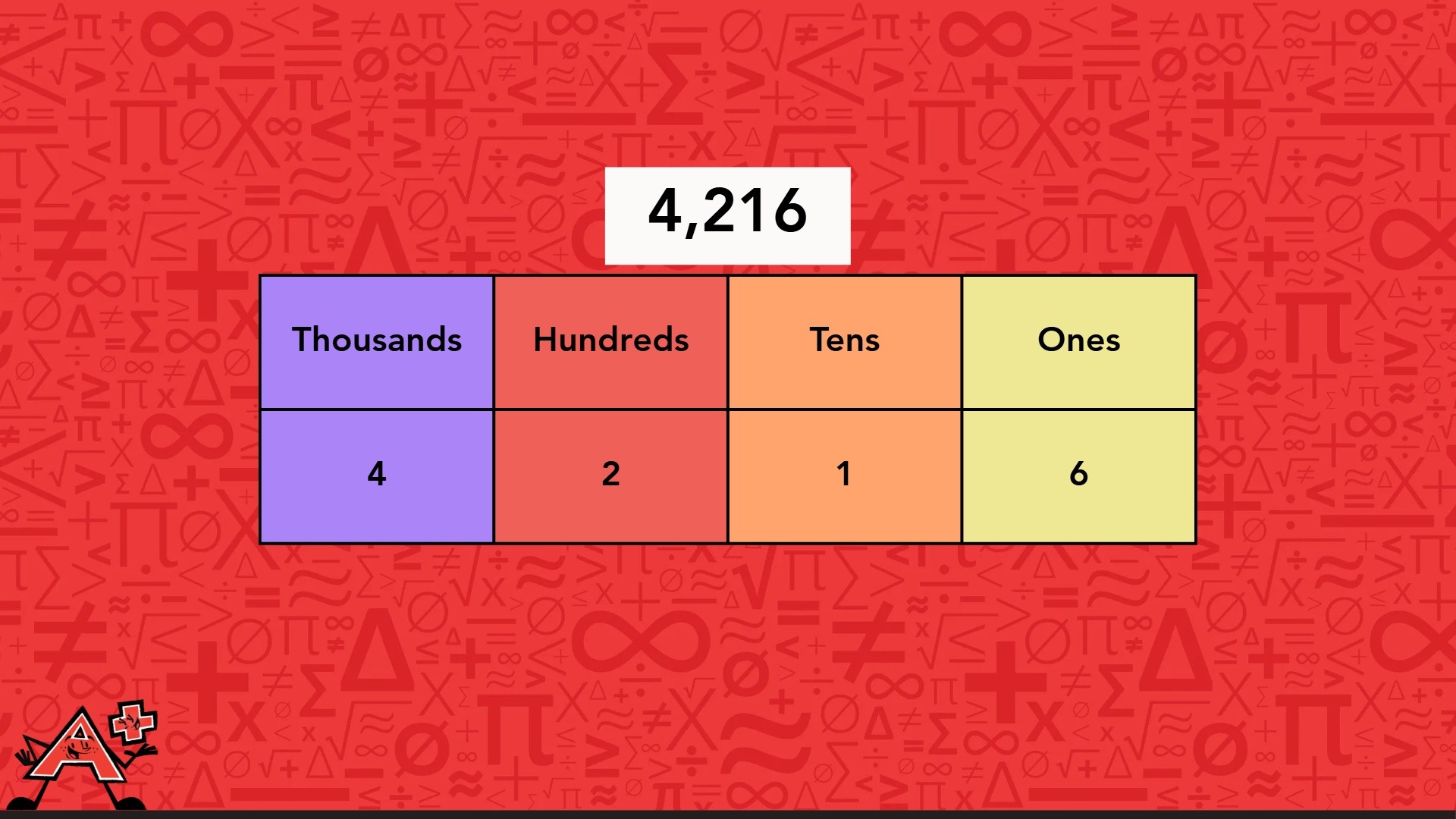
Children use this place-value knowledge when they line up digits correctly and exchange between columns in written calculations with larger numbers.
📕 You May Also Like: What Is Place Value and Why Does It Underpin KS2 Maths?
2. Fractions, Decimals and Percentages
Children work with fractions, decimals and percentages as different ways of representing the same value. For example, 25%, 0.25 and \(\Large\frac{1}{4}\) all represent one quarter.
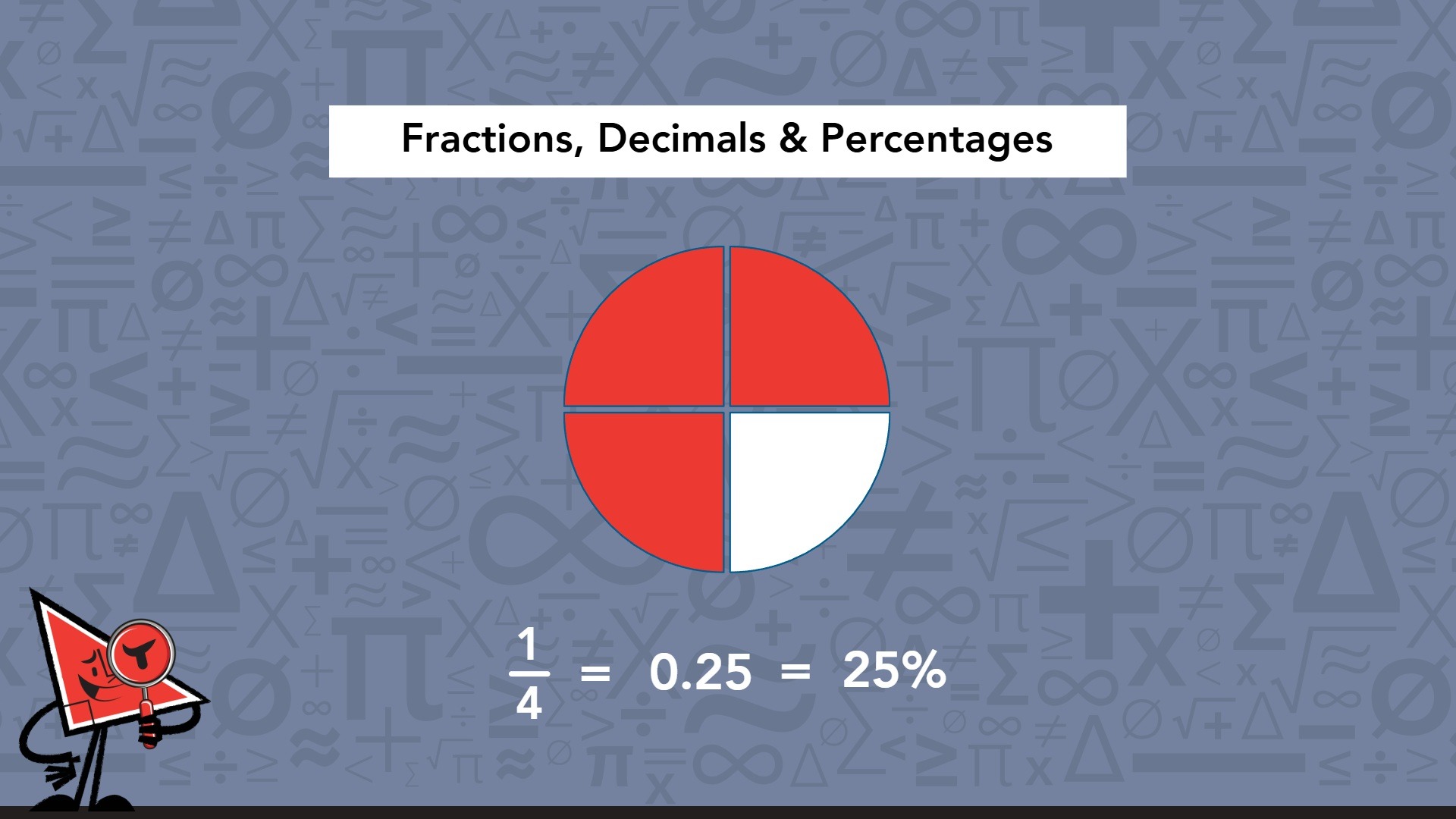
We can see all three forms with a clock example, where we know one hour has 60 minutes. To find one quarter of an hour, we divide 60 by 4 and get 15 minutes, so \(\Large\frac{15}{60}\) = \(\Large\frac{1}{4}\).
Now we can look at what portion of the full 60-minute hour those 15 minutes represent by dividing the part, 15, by the whole, 60, which gives us the decimal 0.25. To express that decimal as a percentage, we multiply 0.25 by 100 and get 25%.
Children build on these connections in Year 7 as they work interchangeably with fractions and their decimal equivalents and connect fractions with percentages, ratio and other multiplicative relationships.
📕 You May Also Like: Why Fractions, Decimals & Percentages Confuse Your Child
3. Basic Algebra
Year 6 introduces letters and symbols to represent unknown values. In x + 9 = 17, children should understand that x represents the unknown number and use the relationship between addition and subtraction to find it.
They can ask which number added to 9 makes 17, or use the inverse operation and calculate 17 − 9 = 8. Therefore, x = 8.
From simple unknowns like x in this example, algebra progresses at KS3 to expressions, equations and relationships between variables.
In secondary maths, multi-step problems can involve more stages and require children to keep track of how the result from one step connects to the next.
4. Ratio and Proportion
Children use ratio and proportion to understand how quantities relate and change together.
Suppose 4 books cost £16 and we want to find the cost of 7 books. First, we need to find the cost of 1 book, so we divide £16 by 4 and get £4.
Once we know that 1 book costs £4, we can find the cost of 7 books by calculating 7 × £4 = £28. Children use this proportional relationship to scale quantities up or down while keeping the relationship between them the same.
At KS3, this foundation develops further as children compare ratios, divide quantities in a given ratio and solve problems involving direct proportion.
📕 You May Also Like: How Proportional Reasoning Impacts GCSE Maths Success
5. Reasoning through Multi-Step Problems
Children use mathematical reasoning to decide how to approach a problem and why a particular method makes sense. In a multi-step problem, they also need to recognise which calculations to use and in what order.
Imagine 3 cinema tickets cost £8 each and you pay with £30. Children need to recognise that they cannot find the change until they know the total cost.
They first need to calculate 3 × £8 = £24 to find the total cost, then subtract £30 − £24 = £6 to find the change. The reasoning comes from identifying how the two pieces of information connect and why the calculations need to happen in that order.
Secondary maths develops this skill through complex multi-step problems, where children need to select appropriate strategies and use what they already know without always being directed towards a particular method.
📕 You May Also Like: The Year 6 Maths Skills That Help Children Start Secondary School Confidently
4 Simple Readiness Checks Parents Can Try at Home
Parents can get an initial sense of secondary maths readiness by looking at how confidently their child recalls, explains and applies the maths they have already learned. These simple checks cannot cover everything your child knows, but they can give you a useful starting point for seeing whether their Key Stage 2 foundations are secure enough to build on.
Here are four questions that can guide what you look for at home:
1. How confidently does your child recall and use number facts?
Look at whether they can use number facts, place value and the four operations without having to reconstruct basic knowledge each time. Secure recall also leaves more attention for the reasoning and problem-solving that develops further at KS3. |
2. Can they explain why their method works?
Ask your child to talk you through something they have already completed in their homework or schoolwork. Listen for more than a sequence of remembered steps. Do they understand why they chose an operation, how the numbers relate or why their answer makes sense? Mathematical reasoning requires children to follow a line of enquiry and justify their thinking, so explanation can reveal understanding that a correct answer alone may not show. |
3. What happens when the same maths appears in a different form?
Compare how your child approaches a concept they recognise when the wording, representation or context changes. Can they identify the mathematical relationship and use what they already know? NCETM Checkpoints use diagnostic questions and activities to check how securely students understand important concepts and whether they can use that understanding in different situations. |
4. How well does your child manage a multi-step problem?
Look at whether they can break the problem into smaller parts, decide what they need to find first and use that result to continue. This can show you how confidently they organise what they know and work towards a solution across several connected steps. |
If one or more of these checks raises a concern, it may be useful to look more closely at the maths behind the difficulty. Your child may find a Year 6 topic difficult because some of the knowledge it builds on is not yet secure. DfE guidance recommends checking prior learning to understand what children already know before they move on to new material.
At our Mathnasium centre, we take that closer look through a diagnostic assessment, then build a learning plan around what your child needs next.
📕 You May Also Like: What to Expect From Year 7 Maths: A Parent's Guide
 At Mathnasium, our instructors combine proven teaching techniques with guided questioning to develop mathematical understanding, problem-solving skills and confidence.
How Mathnasium Helps Children Prepare for Secondary Maths
Mathnasium is a maths-only learning centre dedicated to helping students of all skill levels excel in maths.
For children approaching secondary school, preparation starts with making sure the maths they already know gives them a secure foundation for what comes next.
Our primary school maths programme strengthens the skills and understanding children develop during primary school, while our secondary school maths programme builds on those foundations as maths becomes more complex.
We deliver this support through the Mathnasium Method™, our proprietary teaching approach designed to build maths mastery through deep understanding. Our approach includes:
-
Assessment and customised learning plans. Every child begins their Mathnasium journey with a diagnostic assessment that identifies their current skills, strengths and knowledge gaps. We use the results to create a bespoke learning plan that builds on what they already know and focuses on what they need to learn next.
-
Teaching for understanding. Our specially trained instructors teach children how and why maths works through mental, verbal, visual, tactile and written techniques. They also use Socratic questioning to encourage children to explain their thinking, make connections and work towards solutions, which develops the deeper understanding and problem-solving skills they need as they progress through secondary maths.
-
Face-to-face instruction. Children work face-to-face with specially trained instructors while following their own learning plan at a pace that suits their needs. Families can access the same tailored approach in-centre or through live online tuition at participating centres.
-
Confidence as maths develops. Children strengthen their understanding and mathematical thinking as they work through their learning plan. This gives them support as they move from primary foundations into areas such as algebra, ratio, geometry and other secondary-school maths topics.
The results show what this approach can achieve:
-
94% of parents report an improvement in their child's maths skills and understanding
-
93% of parents report their child's improved attitude towards maths after attending Mathnasium
-
90% of students saw an improvement in their school grades
With over 1,250 centres worldwide, including over 40 across the UK, there is likely a Mathnasium centre near you.
Families across Marshalswick, Bernards Heath, Clarence Park and Fleetville, Verulam and Verulamium Park, City Centre and Abbey District and Sopwell trust Mathnasium of St Albans to help their children build lasting maths confidence.
If secondary school maths readiness, or any other topic, is on your mind, our team is ready to help.
✉️ Click Contact Us to get in touch with Mathnasium of St Albans
Not near St Albans?
📍 Find a Mathnasium Centre Near You


 01727 322830