

Mount Vernon
7696 H Richmond Hwy
Alexandria, VA 22306

Confidence in math doesn’t vanish overnight. It chips away gradually and can be triggered by something as innocuous as one confusing lesson or one red mark at a time.
Maybe your child used to love solving puzzles or counting change, but now even simple homework brings sighs or shut-downs. And while some may begin to think that their child just isn’t ‘gifted’ for math, as educators, we know to look for clues in the learning process rather than ability.
We meet students who struggle with math every day at Mathnasium, and we also manage to transform their relationship with the subject regardless of their starting point.
The key is in understanding how the student thinks and feels about math, what impacted their beliefs around their ‘math ability,’ and how to reignite their natural curiosity and love for learning.

Working with thousands of students of all skill levels, it’s easy to observe patterns in how students approach math, including the confidence blockers, the most common of which are missed foundational skills, confusing pacing, memorization without meaning, and a lack of support when mistakes happen.
Let’s unpack.
Math is cumulative, so when a student misses key concepts such as regrouping, fractions, or negative numbers, they will inevitably struggle with new material that builds on these foundations.
By the time these gaps manifest as a string of subpar grades or missed assignments, they become harder to see, and challenges get attributed to other factors like topic difficulty.
This is also how many students go from feeling like math used to make sense to no longer “being a math person.” It has nothing to do with their capabilities; they simply missed one or a few foundation blocks.
The National Bureau of Economic Research highlights that early, targeted tutoring is one of the most effective ways to address academic gaps before they affect long-term achievement.
If your child is well past the “early tutoring” window, don’t worry; there are still ways to turn the ship around. At Mathnasium, for instance, the enrollment process starts with a free diagnostic assessment that uncovers the learning gaps, so we can create tailored plans to address them, rebuild the foundations, and course correct towards math success.
📕 You May Also Like: Building Confidence in Math: How Tutoring Can Help
We can probably all agree that every child learns at their own speed. Some need more time to work through a new concept, while others pick it up quickly and want to move ahead.
Sadly, in most classrooms, that flexibility just isn’t possible. So, students end up feeling either rushed or bored, and both experiences chip away at confidence. The faster-paced learners tune out. The ones who need more time start to panic.
In fact, one study found that over 30% of students show symptoms of math anxiety, such as getting tense at the thought of doing homework or starting on math problems. A 2021 meta-analysis found that this anxiety impacts both students’ confidence and academic achievement.
To lower the anxiety, we have to lower or entirely remove the pressure to perform. At Mathnasium, for example, students can progress at their own pace. We focus on creating a stress-free environment where they can explore math on their own terms and even begin to enjoy the process of learning.
📕 You May Also Like: How to Prevent Back-to-School Anxiety
Plenty of kids get through math class by memorizing steps. They learn the trick for dividing fractions or the procedure for solving an equation, and for a while, that works. The trouble starts the moment the problem looks even a little different. Suddenly the “right steps” don’t fit, and they’re left guessing.
This doesn’t mean the child isn’t capable. It simply means they were taught what to do but not why it works. And without the “why,” math starts to feel unpredictable and even scary.
A study examining students’ use of learned procedures found that many children rely on incorrect or incomplete memorized strategies, which weakens conceptual understanding and causes long-term confusion. It becomes especially noticeable in middle and high school, when flexibility and conceptual reasoning matter more than memorized steps.
At Mathnasium, we slow things down and teach the logic behind the method. Once students understand the structure of the math, they’re no longer dependent on tricks and begin to trust their reasoning. That’s where confidence grows.
📕 You May Also Like: Common Middle School Math Struggles & How to Bridge the Gaps
Every child makes mistakes in math. The problem arises when they keep making the same mistake and no one helps them understand why. Without feedback, errors start to feel like personal shortcomings instead of normal parts of learning.
We’ve seen many students assume they “just aren’t good at math” after a string of uncorrected errors. According to a 2021 study, low understanding paired with low confidence is a major driver of negative attitudes toward math. Kids stop trying not because they lack potential but because they're tired of feeling lost.
Support changes everything. At Mathnasium, tutors guide students through mistakes with care and clarity. The goal isn’t to point out what went wrong, but to help students understand what to try next. That shift turns mistakes into growth instead of frustration.
📕 You May Also Like: How Feedback Can Build (& Erode) Math Confidence
Math progress isn’t always visible. A student may be improving steadily, but gradual growth can feel invisible without regular checkpoints. When children can’t see their own improvement, they often assume they aren’t progressing at all.
A 2024 analysis of math self-beliefs concluded that students with lower confidence consistently underestimate their progress, even when demonstrating measurable improvement.
A similar research study in Korea found that self-confidence is one of the best predictors of performance in high school math.
So, these self-beliefs tend to become self-fulfilling prophecies. The best way to break the curse: Change the belief. At Mathnasium, we make it a point to celebrate any progress, regardless of how big or small, so students begin to observe their growth, understand that mistakes are a built-in part of the learning process, and build resilience along the way.
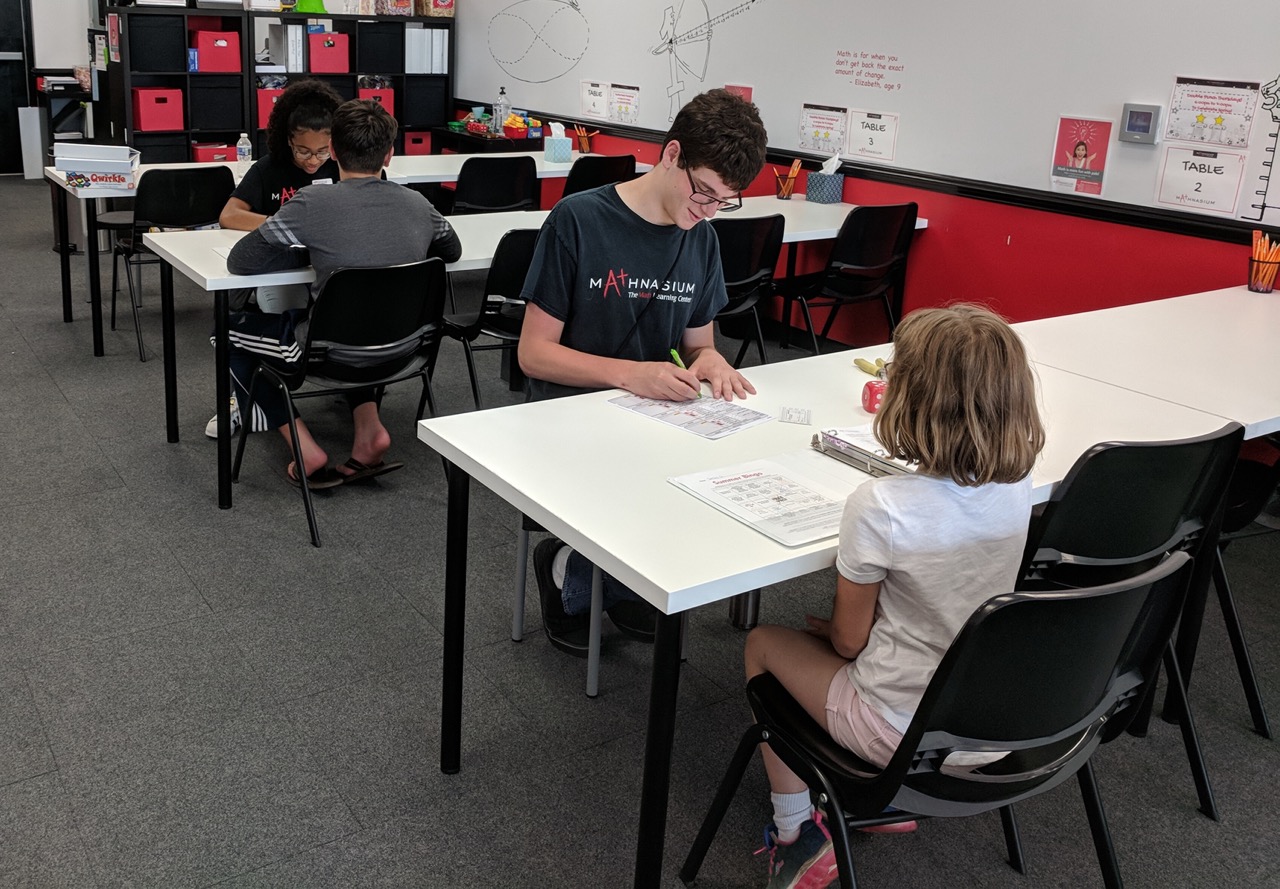
Structured practice and steady guidance help students rebuild confidence one skill at a time.
Confidence doesn’t bounce back all at once. It takes time, some tweaking and tailoring of the teaching approach, and a learning environment where mistakes aren’t feared but explored.
Here’s how we help students feel capable (again):
Before jumping into instruction, take time to understand what the student knows and where things started to unravel. A diagnostic assessment uncovers strengths, gaps, and learning habits—so the plan that follows actually fits.
At Mathnasium, every student begins with this step. It’s how we personalize their learning and avoid wasting time on material they’ve already mastered.
Abstract ideas become clearer when students can see them. Tools like number lines, fraction models, and diagrams make the structure of math more accessible.
Visual strategies can both help concepts click easier and reduce overload, i.e., build mental reference points that stick. That clarity fuels confidence.
Progress doesn’t have to be dramatic to be meaningful. Students need steady practice with the right level of challenge—not too easy, not too hard.
Each solved problem builds trust in their abilities. Over time, those small wins rewire their self-image as a math learner.
Reframe how you think about errors. Errors aren’t failures; they’re just insights. When students talk through their thinking, we can see where understanding breaks down and how to rebuild it.
According to growth mindset research, students who view mistakes as learning moments stay engaged longer and develop greater confidence in their problem-solving skills.
Students who practice consistently begin to spot patterns, trust strategies, and approach new problems with less hesitation. A recent report confirmed that regular engagement with similar tasks improves student confidence and lowers avoidance.
That’s why Mathnasium focuses on steady progress. In each session, students revisit old skills, build new ones, and walk away with a clearer sense of where they’re headed. Visible milestones, no matter how small, help them track growth and believe in it.
📕 You May Also Like: How to Nurture Confident Math Thinkers, Not Just Answer-Getters

At Mathnasium, building or restoring confidence is part of the learning experience. Our approach helps students feel capable by making math clear, structured, and personalized from the very first session.
Here’s what that looks like in practice:
A diagnostic assessment that reveals the real starting point: Every student begins with an assessment that identifies their current skill level, knowledge gaps, and learning style. It helps us understand the root causes of confusion and how they learn best. Many parents find this step clarifies why their child began to lose confidence.
A personalized learning plan built for how they learn: Using diagnostic insights, we create a plan tailored to the student’s skill level and pacing needs. Whether they’re filling foundational gaps or ready to move ahead, instruction is targeted and purposeful.
Face-to-face instruction that feels personal” Tutors work with students individually within a small-group environment. They explain concepts clearly, guide thinking, and adjust instruction in real time. This support helps students feel seen and encouraged, not rushed or judged.
Visible progress that boosts motivation: Students track their own milestones at the center, and families receive regular updates. When children can point to skills they’ve mastered, they start trusting their abilities again.
Families consistently report meaningful changes:
94% of parents say their child’s math skills improved
93% notice a more positive attitude toward math
90% see better grades
Families in or near Alexandria, VA, can visit Mathnasium of Mount Vernon, a trusted local center with years of experience rebuilding students' skills and confidence in math.
Our center is located in the Hybla Valley Shopping Center.
You can reach us at (571) 281-7202 or schedule your child’s free assessment online in just a couple of clicks.
Mathnasium of Mount Vernon is a math-only learning center for K-12 students in Alexandria, VA. Trusted by over a million parents, Mathnasium uses personalized learning plans and the proprietary Mathnasium Method™ to help students catch up, keep up, and get ahead on their math journey.
Our specially trained tutors deliver face-to-face instruction in a supportive and fun small-group environment, working with students to develop a deep understanding of math, build confidence, and improve academic performance.
Schedule Free Assessment
 (571) 281-7202