











Having equal sides and equal angles.
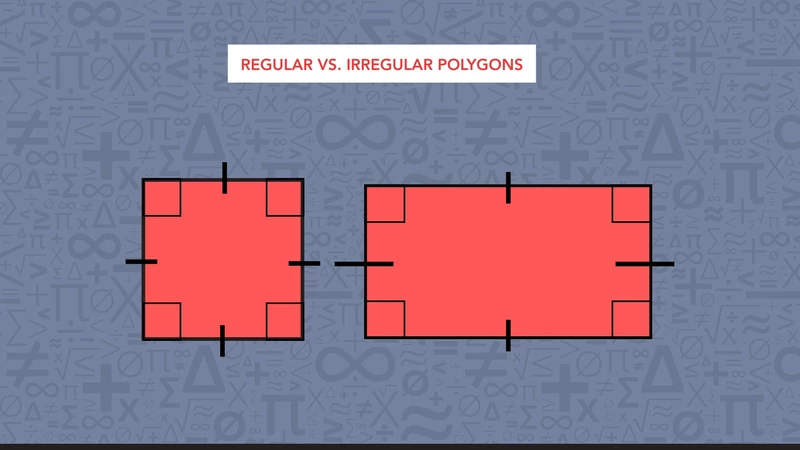
A regular figure is a shape whose sides are all the same length and whose angles are all the same measure. Every side matches every other side, and every angle matches every other angle, giving the shape a perfectly balanced, symmetrical look.
Some familiar regular figures:
-
An equilateral triangle (3 equal sides, 3 equal 60° angles)
-
A square (4 equal sides, 4 equal 90° angles)
-
A regular pentagon (5 equal sides, 5 equal angles)
-
A regular hexagon (6 equal sides, 6 equal angles)
A shape is only "regular" if it meets both conditions at once. Otherwise, we call it an "irregular figure." For example, a rhombus (that isn't a square) has four equal sides but not four equal angles, so it is irregular.
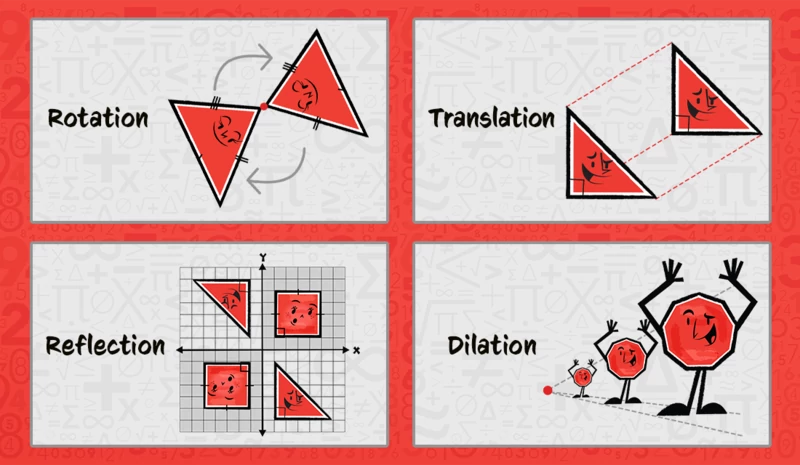
Regular figures are closely tied to symmetry. Because every side and angle matches, regular figures have multiple lines of symmetry and can be rotated to look the same in several positions.
When Do Students Learn About Regular Figures?
Students build toward the idea of regular figures through their early work identifying and comparing shapes.
Grades K–2 – Identifying Shapes
Students name and sort basic shapes, beginning to notice which ones have sides and angles that look the same.
Grades 3–5 – Comparing Sides and Angles
Students measure sides and angles directly, learning to test whether a shape qualifies as regular based on equal side lengths and equal angle measures.
Grades 6+ – Regular Figures in Formal Geometry
Students use regular figures in formulas for perimeter, area, and interior angle sums, and connect them to symmetry and transformations.