











The process of expressing a number to the nearest specified place within a given number system.
Rounding off means replacing a number with a simpler, nearby value based on a chosen place value, such as the nearest ten, hundred, or tenth. Instead of using the exact number, we use the closest "round" number, making it easier to estimate and work with.
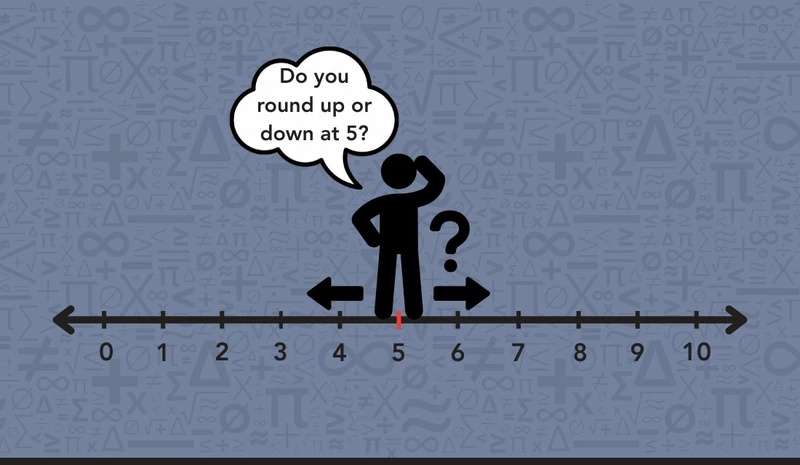
To round a number, look at the digit just after the place you're rounding to:
-
If that digit is 5 or greater, round up
-
If that digit is less than 5, round down
For example:
-
47 rounded to the nearest ten is 50 (since 7 ≥ 5, round up)
-
43 rounded to the nearest ten is 40 (since 3 < 5, round down)
-
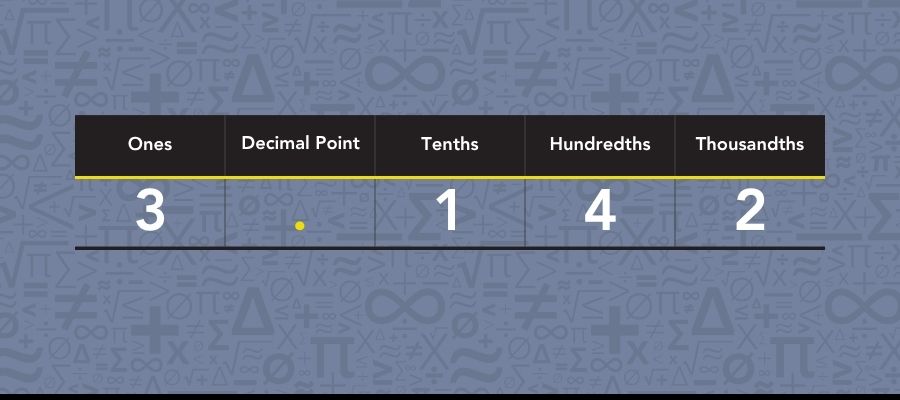
2.36 rounded to the nearest tenth is 2.4
Rounding off is especially useful for estimating answers before doing exact calculations, checking whether a computed answer seems reasonable, and simplifying numbers in real-world contexts like money, measurements, and large populations.
When Do Students Learn About Rounding Off?
Students begin rounding as soon as they have a solid grasp of place value.
Grades K–2 – Introduction to Place Value
Students build an understanding of ones, tens, and hundreds place value, the foundation rounding depends on.
Grades 3–5 – Rounding Whole Numbers and Decimals
Students round whole numbers to any place and extend rounding to decimals, using it to estimate sums, differences, and products.
Grades 6+ – Rounding in Applied Contexts
Students apply rounding when working with significant figures, scientific notation, and real-world data in algebra and science-related math.