Factors and multiples are closely connected in KS2 maths because both come from the same multiplication facts. Children may know their times tables and calculate correctly, yet still may confuse the relationship each term describes.
How, then, can we tell the two apart?
We’ll tackle that question today as we look at what each term means, use examples to compare the two relationships and work through some of the common mistakes children make with factors and multiples.
What Are Factors?
Factors are whole numbers that divide into another whole number with no remainder. We can find factors through multiplication too. For example, 6 × 7 = 42 tells us that 6 and 7 are both factors of 42.
Before we try finding them ourselves, let’s see what makes factors easy to spot.
-
Factors are equal to or smaller than the number they belong to.
-
Every whole number greater than 1 has at least two factors, 1 and the number itself.
-
Factors come in pairs that multiply together to make the original number.
Let’s find all the factors of 20. We can start by looking for pairs of whole numbers that multiply to make 20:
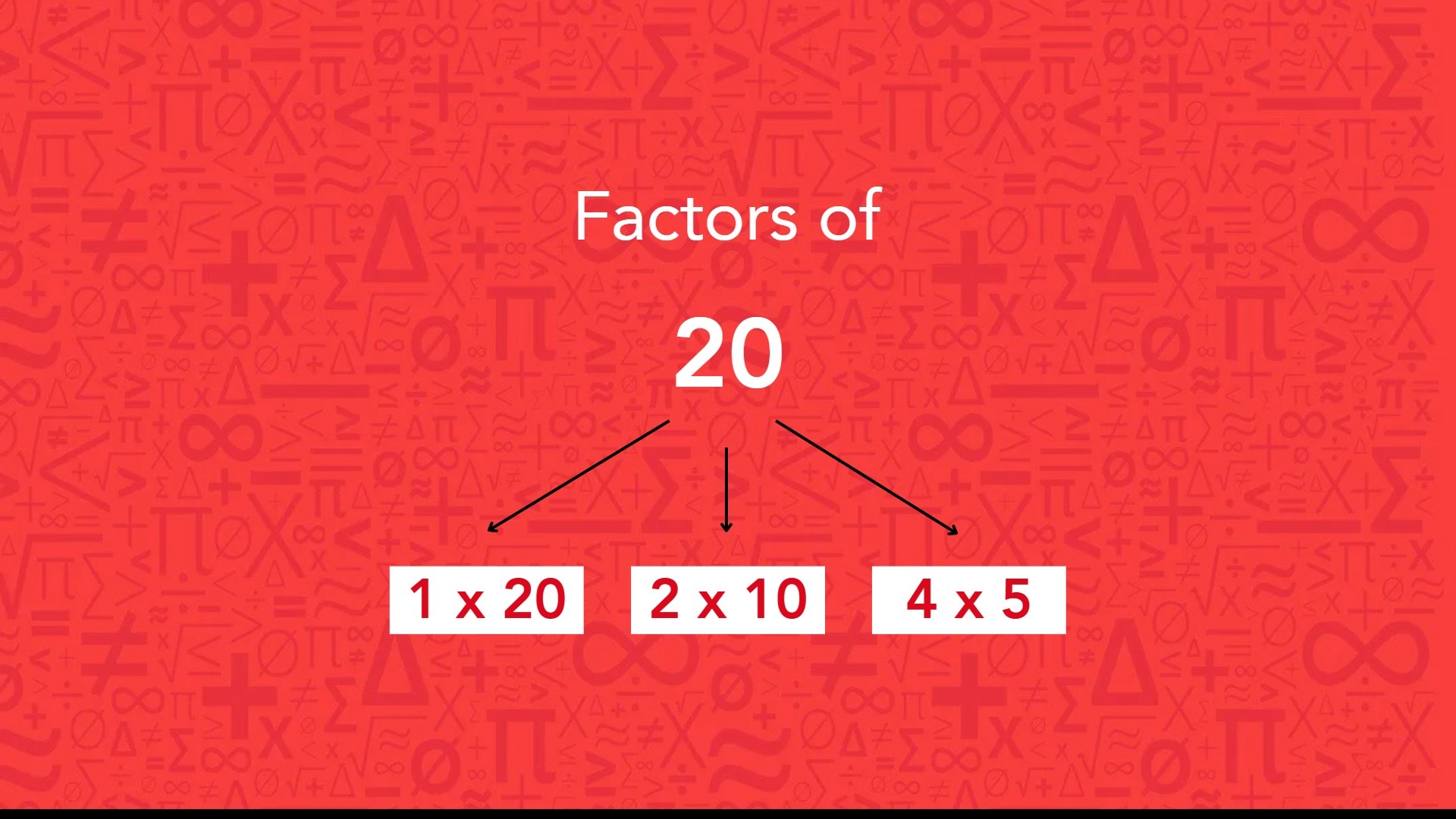
Each pair gives us two factors, so the complete list of factors of 20 is 1, 2, 4, 5, 10 and 20. We can also check them with division. For example, 20 ÷ 4 = 5 with no remainder, which confirms that 4 is a factor of 20.
The National Curriculum for mathematics in England introduces factors alongside factor pairs, multiples and common factors in Year 5.
📕 You May Also Like: What Is a Prime Number? A Child-Friendly Guide
What Are Multiples?
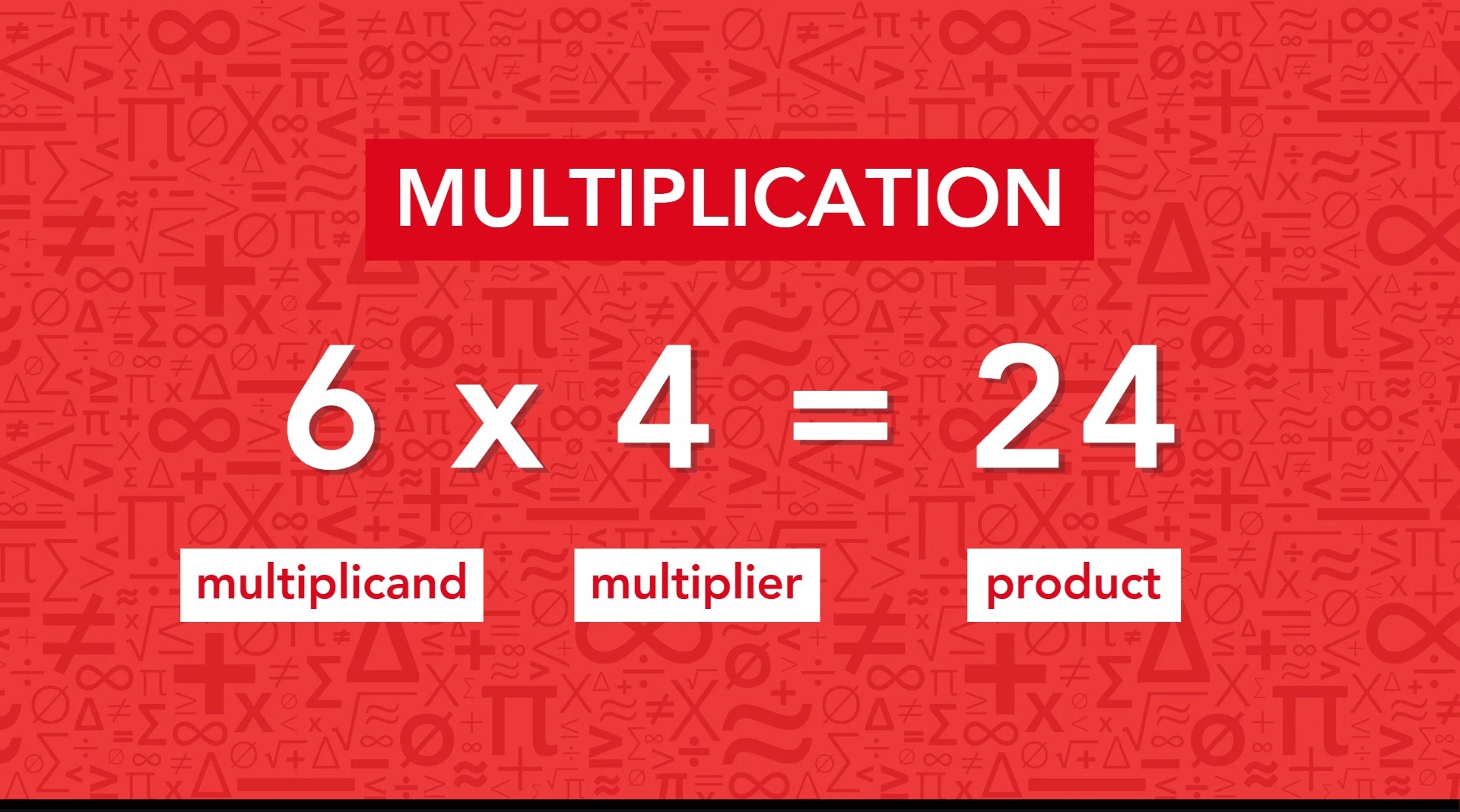
Multiples are the numbers we get when we multiply a number by whole numbers. For example, 6 × 4 = 24 tells us that 24 is a multiple of both 6 and 4. Department for Education guidance calls the result of multiplication a product.
We can find multiples in times tables. Once we start listing them, we can spot a few useful patterns.
-
Multiples continue without end, so every number has infinitely many of them.
-
Positive multiples become larger as we multiply by 1, 2, 3, 4 and so on.
-
The starting number is one of its own positive multiples because we can multiply it by 1.
Let’s find the first six positive multiples of 7:
-
7 × 1 = 7
-
7 × 2 = 14
-
7 × 3 = 21
-
7 × 4 = 28
-
7 × 5 = 35
-
7 × 6 = 42
So, the first six positive multiples of 7 are 7, 14, 21, 28, 35 and 42. If we carried on with 7 × 7, 7 × 8, 7 × 9 and beyond, the list would keep growing.
Children meet the idea behind multiples before Year 5 as they count in different steps and work with multiplication tables. By Year 5, England’s National Curriculum for mathematics expects them to identify multiples and factors and use both terms.
📕 You May Also Like: Multiplication Tables Check 2026: A Guide to Year 4 Times Tables
Why Do Children Mix Up Factors and Multiples?
Factors and multiples can be easy to mix up because the same multiplication fact can show both relationships.
For example, in 5 × 9 = 45:
We can see where the confusion comes from when we put the two relationships side by side.
|
Factors
|
Multiples
|
| Where do we start? |
With the number we want to find factors of |
With the number we want to find multiples of |
| What do we do? |
Find whole numbers that divide into it with no remainder |
Multiply it by whole numbers |
| How many can we find? |
Only a limited number |
Infinitely many |
| Example using 45 |
1, 3, 5, 9, 15, 45 |
45, 90, 135, 180... |
So, why is it so easy to swap the terms? We can lose track of which way the relationship is going.
Look back at 45 in the table. To find its factors, we look for whole numbers that multiply in pairs to make 45, such as 1 × 45, 3 × 15 and 5 × 9. To find its positive multiples, we use 45 as our starting number and multiply it by 1, 2, 3, 4 and so on, which gives us 45, 90, 135, 180...
That change in direction is where the mix-up can happen. Remember, factors are the numbers that can multiply together to give us 45, while multiples are the results we get when we multiply 45 by other whole numbers.
📕 You May Also Like: What Does KS2 Maths Fluency Look Like Beyond Times Tables?
What Are the Most Common Factors and Multiple Mistakes in KS2?
In our experience teaching factors and multiples, we tend to see mistakes with incomplete factor lists and assumptions about which numbers can be factors.
Let’s take a look at three examples:
-
Children may forget 1 and the number itself. Every whole number greater than 1 has both 1 and itself as factors. For example, children may list 2, 3, 6 and 9 as factors of 18 but leave out 1 and 18. Since 1 × 18 = 18, both numbers belong in the complete factor list.
-
The last digit can lead to a wrong assumption about factors. For example, 28 ends in 8, but that does not mean 8 is one of its factors. We can check by dividing 28 ÷ 8, which leaves a remainder. The factor pairs 1 × 28, 2 × 14 and 4 × 7 show us that the factors are 1, 2, 4, 7, 14 and 28.
-
Even numbers can lead to the idea that all their factors are even. We can test that assumption with a simple counterexample. 3 is a factor of 12 because 3 × 4 = 12. Since 3 divides into 12 with no remainder, an even number can have an odd factor too.
Mistakes with factors and multiples can cause problems later in KS2, as England’s National Curriculum asks children in Year 6 to use common factors to simplify fractions and common multiples to express fractions with the common denominator.
If the same mistakes continue, they can point to gaps in how children understand the relationships between numbers. At Mathnasium, instructors use tools such as a diagnostic assessment to identify those gaps and understand where each child needs support before creating a customised learning plan.
📕 You May Also Like: The Year 6 Maths Skills That Help Children Start Secondary School Confidently
 At Mathnasium, we combine a proprietary teaching approach with a comprehensive assessment and bespoke learning plan, all delivered by specially trained maths instructors.
How Mathnasium Helps Children Understand Factors and Multiples
Mathnasium is a maths-only learning centre dedicated to helping students of all skill levels excel in maths.
Whether your child needs to strengthen their understanding of factors and multiples or needs support with maths more broadly, we can help.
Our instructors teach children how and why maths works, so they can understand the number relationships behind concepts such as factors and multiples.
We do this through the Mathnasium Method™, our proprietary teaching approach designed to build maths mastery through deep understanding.
Our approach includes:
-
Assessment and customised learning plans. Every child begins with a diagnostic assessment that identifies their current skills, strengths and knowledge gaps. We use those insights to create a bespoke learning plan around their individual needs and goals.
-
Teaching for understanding. Our specially trained instructors explain how mathematical ideas work and use mental, verbal, visual, tactile and written techniques to support understanding. They can also use questions to encourage children to think through relationships and explain their reasoning independently.
-
Face-to-face instruction. Children learn in a fun and engaging environment, working with instructors face-to-face at the pace that's right for them, both in-centre and online.
-
Confidence and engagement. Sessions include games and earned rewards, so children actively participate, solve problems and engage with maths instead of simply listening to a lesson. They build confidence alongside fluency and many develop a more positive relationship with maths.
The impact extends beyond the classroom:
-
94% of parents report an improvement in their child's maths skills and understanding
-
93% of parents report their child's improved attitude towards maths after attending Mathnasium
-
90% of students saw an improvement in their school grades
With over 1,250 centres worldwide, including over 40 across the UK, there is likely a Mathnasium centre near you.
Families across Crouch End, Highgate, Hornsey and Alexandra Park trust Mathnasium of Crouch End to help their children build lasting maths confidence.
If factors, multiples or any other maths topic is a challenge, our team is ready to help.
✉️ Click Contact Us to get in touch with Mathnasium of Crouch End
Not near Crouch End?
📍 Find a Mathnasium Centre Near You


 020 300 49404