In 3rd grade, students are expected to learn and apply multiplication to solve real problems. By the end of the year, most state standards, including the Common Core, require them to know all single-digit multiplication facts and use them fluently.
But not every child reaches this benchmark on time, and it’s not always because they’re “behind.”
At Mathnasium learning centers, we often meet students who can recite multiplication facts but don’t actually understand what they mean. Others can model equal groups or skip count with confidence but haven’t practiced formal multiplication yet.
Multiplication readiness is defined by a child’s ability to group numbers, recognize repeated patterns, use addition flexibly, and make sense of quantities in real-life scenarios. These skills lay the groundwork for meaningful, lasting fluency.
This guide walks you through the key readiness skills outlined by national standards, explains how to spot them in your child, and offers tips from the Mathnasium Method™ to support confident, successful learning.
What True Multiplication Readiness Looks Like
Before a child can multiply fluently, they need to truly understand what multiplication is and why it works. At Mathnasium, we call this deep understanding “readiness”—the foundation on which true math mastery is built.
If you’re wondering whether your 3rd grader is ready for multiplication, here’s a simple foundation check.
Each of the following skills has been identified by leading educational standards, including the Common Core State Standards for Mathematics (CCSSM) and the National Council of Teachers of Mathematics (NCTM), as essential for multiplication success.
Let’s explore what each skill looks like in practice, why it matters, and how you can spot it in your child’s day-to-day math experience.
1. Skip Counting by 2s, 5s, and 10s
Skip counting lays the groundwork for seeing numbers in groups. When a child counts 2, 4, 6, 8, they’re practicing early multiplication: four groups of 2.
Children who can skip count smoothly and confidently are already showing signs of multiplicative thinking.
At Mathnasium, we often work with students who struggle to skip count consistently, and we see how it directly impacts their ability to grasp multiplication facts. That’s why we use visual aids like number lines and rhythm-based practice to reinforce these sequences until they’re second nature.
2. Understanding Arrays and Repeated Addition
An array is a visual representation of multiplication, where rows and columns make groupings tangible. For example, a 3 by 4 array (three rows of four) shows that 3 × 4 is the same as 4 + 4 + 4.
Repeated addition helps children link what they already know (adding) to what they are learning (multiplying). A child who says “4 + 4 + 4 = 12” and then recognizes it as “3 groups of 4” is taking a critical step forward.
When preparing students for multiplication lessons, we use array tiles, drawing grids, and hands-on grouping activities to help students see what multiplication really means, so when they eventually learn the equation 3 × 4 = 12, they know why.
📕 You May Also Like: 5 Practical Ways to Use Diagrams and Drawings for Math Problems
3. Fluency with Addition and Subtraction Within 20
A surprising number of multiplication struggles are rooted in basic addition delays. If your child hesitates when solving 8 + 7 or 14 – 6, multiplication will feel even harder.
According to Common Core expectations, students should have fluency (speed and accuracy) with these facts by the end of 2nd grade. It’s important to note that fluency doesn’t mean rushing; it means not having to count fingers every time.
Mathnasium helps students close these gaps with personalized strategies like doubles-plus-one, fact families, and number bonds—all designed to make addition and subtraction intuitive.
4. Recognizing and Extending Number Patterns
Multiplication is a pattern-rich domain. From skip-counting to times tables, children who notice patterns like “even numbers in the 2s table” or “the 5s table always ends in 0 or 5” are starting to build critical number sense.
In our center, we encourage pattern exploration through number charts, puzzles, and real-life observations. When students understand that math has a rhythm, they stop guessing and start predicting, which makes multiplication more meaningful and much less intimidating.
5. Using Number Lines and Manipulatives to Model Math Stories
Before solving “3 × 5 = ?”, children need to understand what the question means. Number lines, counters, and story problems bring math to life. For example:
“You have 3 boxes. Each box has 5 crayons. How many crayons in total?”
At Mathnasium, we call these “math stories” and they’re central to how we teach. We use tools like number lines, snap cubes, and math mats to turn abstract equations into concrete experiences.
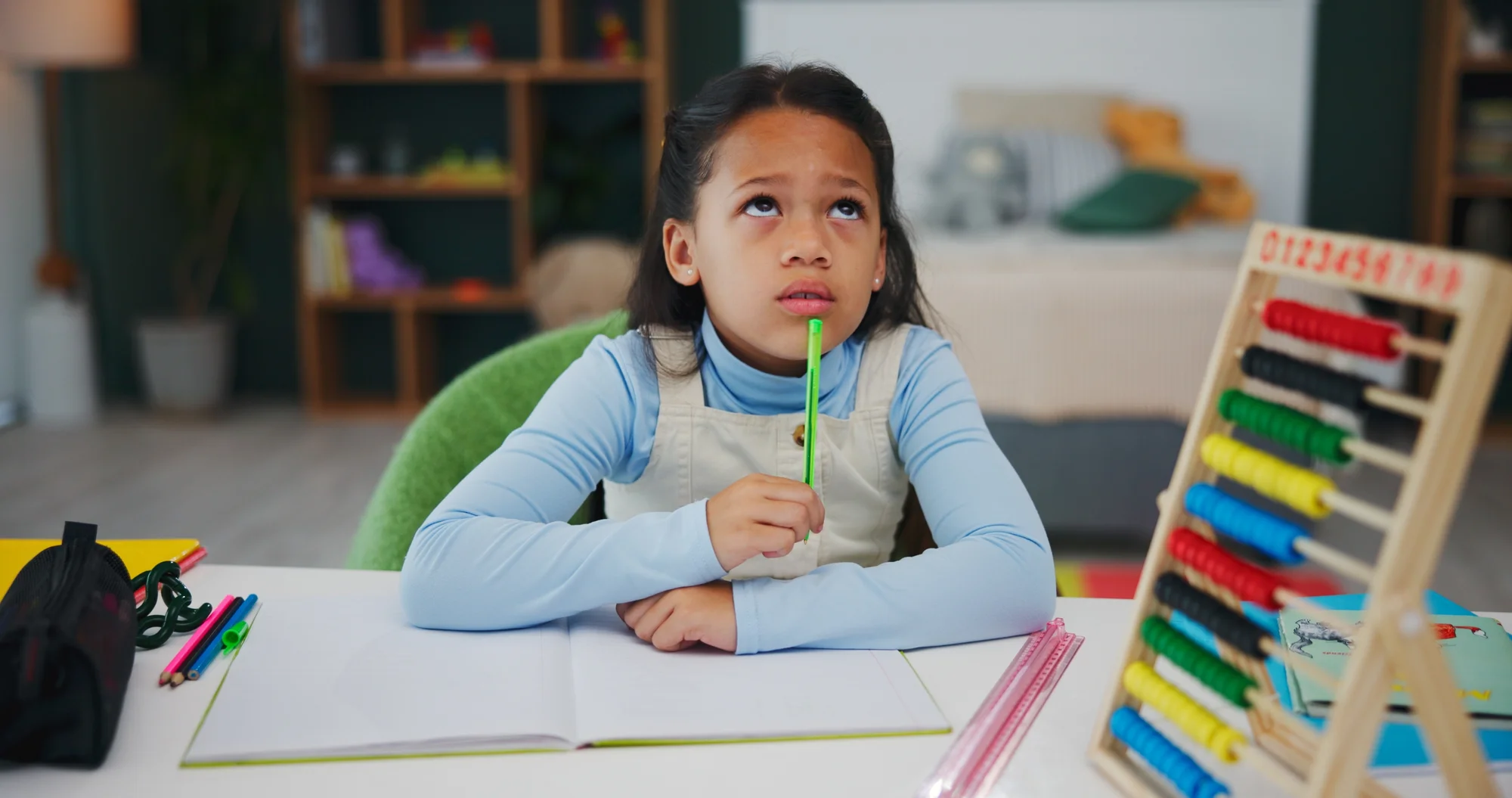
If your child can model this on a number line or with counters (or even with fingers), they’re well on their way to real comprehension.
The Role of the Associative Property and Multiplication Strategies
For many, the idea of mastering multiplication means the ability to recite the times tables. In reality, understanding multiplication is about thinking flexibly with numbers. That’s where the associative property comes in. It tells us that the way numbers are grouped doesn’t change the result:
(2 × 3) × 4 = 2 × (3 × 4)
This concept helps students break apart and reorganize numbers to solve problems efficiently. For example, if a child doesn’t know 6 × 4, they might think:
(3 × 4) + (3 × 4) = 12 + 12 = 24
We like to teach students to use what they do know to figure out what they don’t, whether it’s by doubling (4 × 6 → double 12), splitting (7 × 5 = 5 × 5 + 2 × 5), or visualizing arrays and groups.
These strategies give children multiple pathways to solve problems, reduce frustration, and strengthen confidence.
When students understand the associative property and related strategies early on, they’re better prepared for long multiplication, mental math, and higher-level problem solving.
That’s why we teach multiplication for understanding, not just memorization.
📕 You May Also Like: What is the Associative Property of Multiplication?
6 Key Questions to Ask Yourself
These questions highlight key aspects of multiplication readiness, and observing your child’s approach to these ideas can offer valuable insight into their foundational skills and learning needs:
1. Can your child count forward and backward by 2s, 5s, and 10s?
A student who can count fluently in intervals shows early signs of understanding how numbers grow in groups—an important mental framework for multiplication.
2. Do they understand multiplication as repeated addition?
If your child approaches a question like “What is 3 × 4?” by thinking of it as 4 + 4 + 4, they are making a strong conceptual connection between addition and multiplication.
3. Can they solve basic word problems involving equal groups?
When given a scenario such as “There are 3 boxes with 5 apples in each,” a child who models or describes the total through grouping shows they are ready for multiplicative reasoning.
4. Do they notice and talk about patterns in numbers?
Students who recognize patterns, like the 5s table always ending in 0 or 5, demonstrate growing number sense and awareness of structure.
5. Can they explain how they arrived at an answer?
Verbalizing their thinking shows that a student isn’t just guessing, but that they understand the reasoning behind their solution.
6. Are they curious and confident when faced with math challenges?
Children who lean into problem-solving, even with mistakes, are more likely to persist through the learning curve that multiplication brings.
Finally, here’s a quick activity ideal for understanding how visual learners think about numbers and grouping:
-
Invite your child to group 12 objects (like toy cars or snacks) into 3 equal sets.
-
Then ask, “How many are in each group?”
-
Encourage them to write the matching multiplication sentence and explain their thinking.
📕 You May Also Like: Is My Child ‘Bad at Math’ or Just Missing Foundational Skills?
Why Multiplication Matters in 3rd Grade
In 3rd grade, multiplication marks a shift in how children understand numbers. This is the stage when students transition from adding to reasoning in equal groups, using multiplication as a way to organize, predict, and solve problems more efficiently.
-
According to the Common Core State Standards for Mathematics, 3rd graders should be able to interpret multiplication as finding the total in equal groups and solve problems using models like arrays, number lines, and repeated addition. By the end of the year, they are expected to demonstrate fluency with products of single-digit numbers.
-
The National Council of Teachers of Mathematics (NCTM) emphasizes that conceptual understanding should come before memorization. A child who can explain why 4 × 3 = 12 is more likely to retain that knowledge and apply it flexibly in new situations.
At Mathnasium, we see time and again that when students truly understand multiplication, not just recite it, they develop number sense, more confidence, and greater long-term success in math.

Multiplication readiness is also foundational for future math topics such as division, multi-digit operations, area, fractions, and eventually algebra.
Common Roadblocks and How to Overcome Them
Even when a child seems ready for multiplication, certain obstacles can slow down their progress. These challenges are common, and with the right strategies, they can be overcome.
-
Weak Number Sense: If your child struggles to grasp quantity or compare values, multiplication can feel abstract. Using base-10 blocks, counters, or number lines can make numbers more concrete and accessible.
-
Memorization Without Meaning: Relying solely on flashcards can create a fragile understanding. Instead, introduce multiplication through arrays, real-life groupings (like snacks or toys), and skip-counting songs to build meaning before fluency.
-
Math Anxiety or Avoidance: Some students fear math because they’ve felt confused or rushed in the past. Building a safe, encouraging environment with low-pressure games and story-based problems can rebuild confidence.
-
Inconsistent Fluency: If a student knows 3 × 5 one day but forgets the next, they may lack conceptual connections. Practice should include visual models, word problems, and lots of repetition in meaningful contexts.
At Mathnasium, we meet students exactly where they are. Our tutors use personalized learning plans, face-to-face instruction, and a caring, fun group environment to help each student build understanding at their own pace.
📕 You May Also Like: How to Create a Math-Friendly Homework Environment at Home

Mathnasium working with K-12 students of all skill levels, empowering them to unlock their math potential.
How Mathnasium Supports Multiplication Readiness
At Mathnasium, we understand that every child learns math differently, and multiplication is no exception. That’s why we begin each student’s journey with a diagnostic assessment to identify what they know, what they’re ready to learn next, and where they may need extra support.
Rather than follow a one-size-fits-all curriculum, we create personalized learning plans based on each student’s current understanding. For multiplication readiness, that might include strengthening number sense, practicing repeated addition, or modeling multiplication stories with manipulatives and number lines.
Using the Mathnasium Method™, our tutors teach in a way that makes sense to students—combining visual, verbal, written, and tactile strategies to promote deep conceptual understanding. Multiplication becomes meaningful, not just memorized.
And the results speak for themselves:
-
94% of parents report improvement in their child’s math skills and understanding
-
90% of students see better grades
-
93% of parents notice a more positive attitude toward math
Just as important, our tutors work with students in a caring and fun group environment, where learning feels safe and engaging. When students truly understand multiplication, they build confidence—and that confidence carries through every math class that follows.
With more than 1,100 centers nationwide, families can access top-rated, math-only instruction close to home.
If you’re based in or around Richmond, VA, Mathnasium of Tuckahoe is a trusted local resource with years of experience transforming how students think and feel about math.
Whether your child is looking to catch up, keep up, or get ahead in math, schedule a free diagnostic assessment, and we’ll carve out their path to math success.
📅 Schedule a Free Diagnostic Assessment at Mathnasium of Tuckahoe
Not near Richmond?
📍Discover Mathnasium Learning Centers Near You


 (804) 282-3805